Parenting education and child benefit help Nepalese children stay longer in school
A model supported by Save the Children has been shown to accelerate children's development and is projected to help them stay in school up to three years longer.
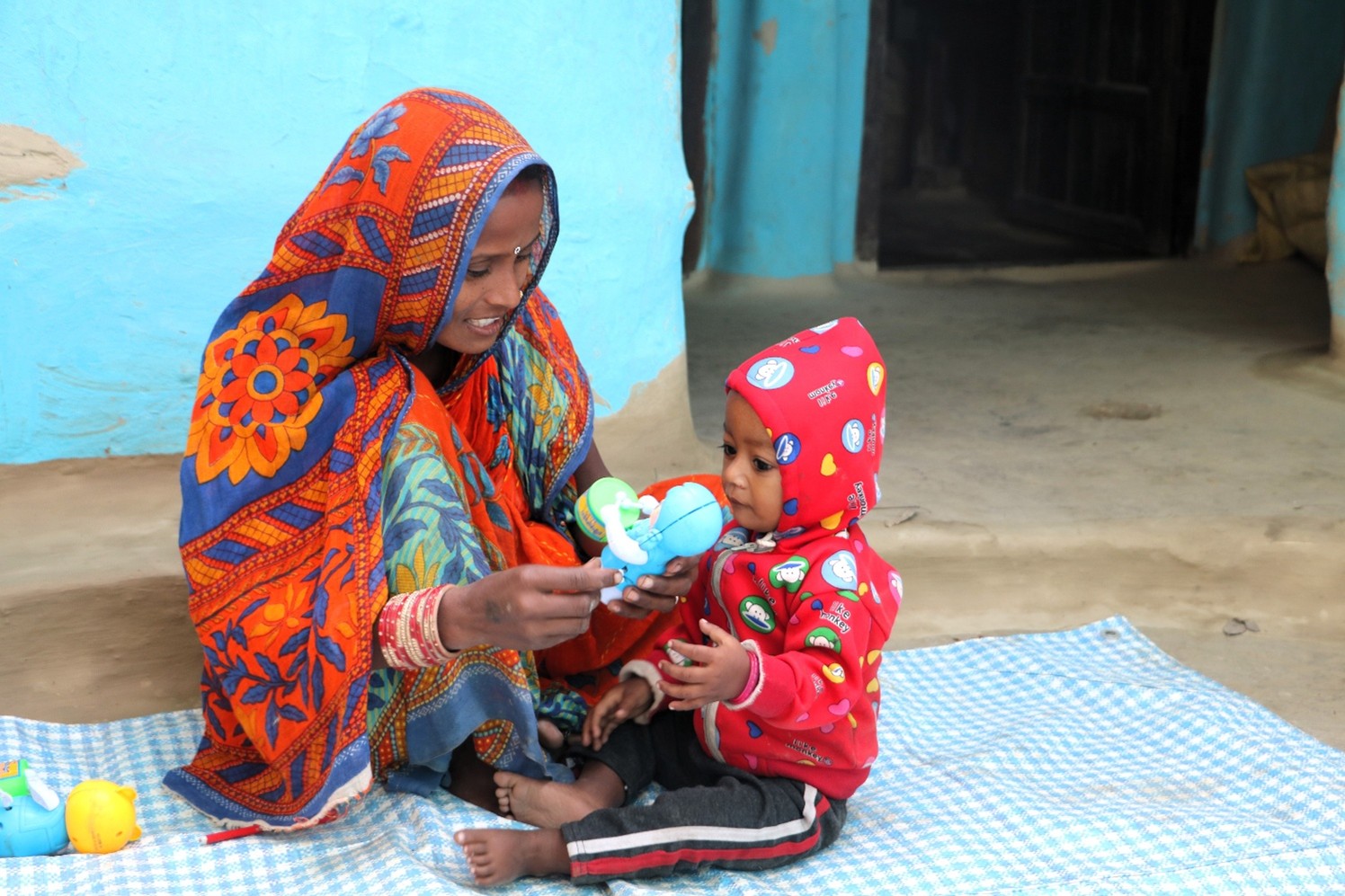
In cooperation with Nepalese authorities, Save the Children has developed an approach that combines child benefit payments for low-income families with a good parenting training programme. The training programme builds parents’ and guardians’ knowledge and skills in areas such as parent-child interaction, child nutrition, emotional development and household financial management. Since 2018, approximately 6,800 parents and guardians have taken part in the training.
Follow-up studies, including research conducted in 2024, show that the children of parents or guardians who participated in the parenting programme demonstrated significantly stronger social, emotional, motor and language development than children whose parents or guardians only received child benefit as a small cash transfer.
A long-term scenario analysis commissioned by Save the Children found that the children of the families participating in the programme can be expected to remain in education for three years longer than average. If this can be achieved, the change will also have positive effects on lifetime earnings and broader social and economic development in Nepal.
Background
At the beginning of Save the Children’s 2022–2025 programme period, one fifth of Nepal’s population lived in multidimensional poverty. Families struggling to make their ends meet often face difficulties in providing their children with, for example, sufficiently nutritious food. In 2022, an estimated 25 per cent of children under five suffered from stunted physical growth.
In Nepal, child benefit for children under the age of five forms part of the national social protection system, which was introduced in 2009 to prevent malnutrition. In 2022, child benefit reached around 45 per cent of all children.
Support and funding
The Finnish Ministry for Foreign Affairs has supported the Save the Children’s programme by EUR 1.45 million in 2022–2025 and is supporting its further development with approximately EUR 1.1 million during 2026–2029. The programme is implemented in cooperation with local authorities, municipalities and local partner organisations (RWUA, Everest Club and SPCSN).